What is the working principle of high speed spindle bearings?
In modern industrial manufacturing, high speed spindle bearings play a crucial role in various precision machinery and high - speed equipment. As a high speed spindle bearings supplier, I am very familiar with these remarkable components and would like to share with you their working principles.
Basic Structure of High Speed Spindle Bearings
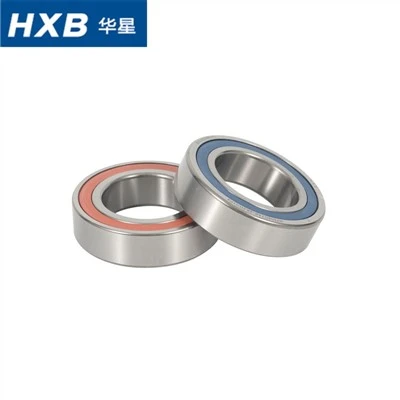
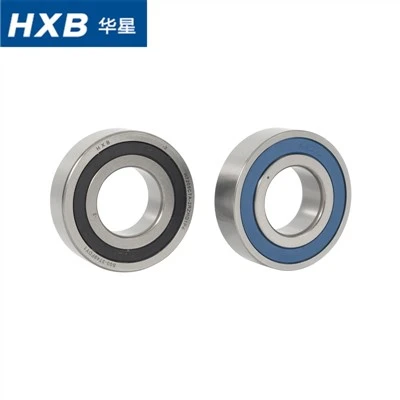
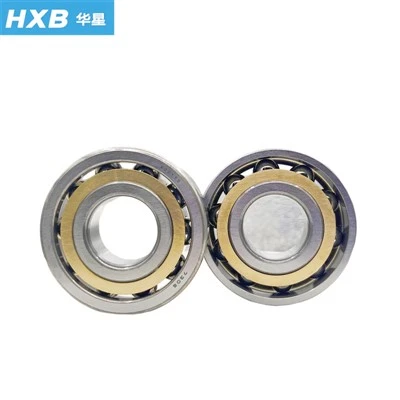
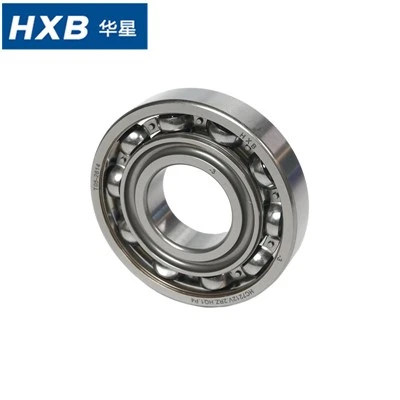
High speed spindle bearings are generally of the angular contact ball bearing type. They consist of an inner ring, an outer ring, a set of balls, and a cage. The inner and outer rings have raceways where the balls roll. The cage is designed to keep the balls evenly spaced, preventing them from rubbing against each other and ensuring smooth operation.
For example, our Spindle Bearing B71908 - C - 2RSD - P4S - UL has a precision - engineered inner and outer ring with a specific groove profile for the balls. The high - quality stainless steel cage maintains the proper separation of the balls during high - speed rotation.
Working Principle in Rotation
When the spindle starts to rotate, the inner ring of the bearing rotates along with the spindle shaft. The balls, which are in contact with both the inner and outer ring raceways, start to roll. Due to the angular contact design of the bearing, the balls can support both radial and axial loads simultaneously.
The angular contact angle is a key factor. A larger contact angle can increase the axial load - carrying capacity but may reduce the high - speed performance. Conversely, a smaller contact angle is more suitable for high - speed applications but has lower axial load capacity. Our Super Precision Bearings B71902 - C - 2RSD - T - P4S are designed with an optimized contact angle to balance high - speed operation and load - carrying capabilities.
As the spindle rotates at high speed, the rolling motion of the balls generates friction. To reduce this friction, high - quality lubricants are used. The lubricant forms a thin film between the balls and the raceways, which not only reduces friction but also helps in dissipating heat. This is essential because excessive heat can cause the bearing materials to expand, leading to dimensional changes and potential failure.
Load Distribution
In a high - speed spindle system, the bearings need to handle different types of loads. Radial loads act perpendicular to the axis of the spindle, while axial loads act parallel to the axis. The design of high speed spindle bearings allows for efficient load distribution.
When a radial load is applied, the balls transfer the load from the inner ring to the outer ring through the rolling contact. In the case of axial loads, the angular contact geometry of the bearing enables the balls to withstand and transmit these forces. For instance, in our CNC Router Spindle Bearing B7005 - C - T - 2RSD - P4S - UL, the load distribution mechanism ensures stable operation even under complex loading conditions in a CNC router.

Precision and Tolerance
High speed spindle bearings require extremely high precision and tight tolerances. The dimensional accuracy of the inner and outer rings, the roundness and surface finish of the balls, and the position accuracy of the cage all have a significant impact on the performance of the bearing.
Precision grinding and machining processes are used to manufacture these bearings to meet the strict requirements. Our Spindle Bearings B7010C - 2RSD - T - P4S - UL are produced with high - precision manufacturing techniques, ensuring that the bearing can operate at high speeds with minimal vibration and noise.
Temperature Management
During high - speed rotation, heat generation is inevitable. Excessive temperature can degrade the lubricant, cause material expansion, and reduce the service life of the bearing. Therefore, temperature management is a critical aspect of the working principle of high speed spindle bearings.
Some high speed spindle bearings are designed with special features for heat dissipation. For example, the use of materials with good thermal conductivity in the bearing components and the design of ventilation channels in the bearing housing can help in removing heat. Our Precision Spindle Bearings B7014 - E - T - 2RSD - P4S - UL are engineered to manage temperature effectively, ensuring long - term reliability in high - speed applications.
Lubrication
Lubrication is the lifeblood of high speed spindle bearings. There are different types of lubricants used, such as grease and oil. Grease lubrication is simple and cost - effective, suitable for some medium - speed applications. It provides a certain degree of sealing and protection against contaminants.
Oil lubrication, on the other hand, is more suitable for high - speed and high - precision applications. Oil can be supplied through different methods, such as oil - mist lubrication, oil - jet lubrication, or circulating oil lubrication. Oil - mist lubrication can deliver a fine mist of oil to the bearing, providing excellent lubrication and cooling effects.
Application in Different Industries
High speed spindle bearings are widely used in various industries. In the machine tool industry, they are used in CNC machining centers, lathes, and milling machines to ensure high - precision machining. In the aerospace industry, they are used in aircraft engines and other high - speed rotating components. In the electronics industry, they are used in high - speed spindle motors for precision manufacturing of electronic components.
Why Choose Our High Speed Spindle Bearings
As a high speed spindle bearings supplier, we are committed to providing high - quality products. Our bearings are manufactured with the latest technology and strict quality control measures. We offer a wide range of products to meet the diverse needs of different industries. Whether you need a bearing for a high - speed CNC machine or a precision aerospace application, we have the right solution for you.
If you are interested in our high speed spindle bearings and would like to discuss your specific requirements, please feel free to contact us for a procurement negotiation. We look forward to working with you to provide you with the best bearing solutions for your applications.
References
- Harris, T. A., & Kotzalas, M. N. (2007). Rolling Bearing Analysis. John Wiley & Sons.
- Gupta, P. K. (2002). Ball and Roller Bearing Engineering. CRC Press.