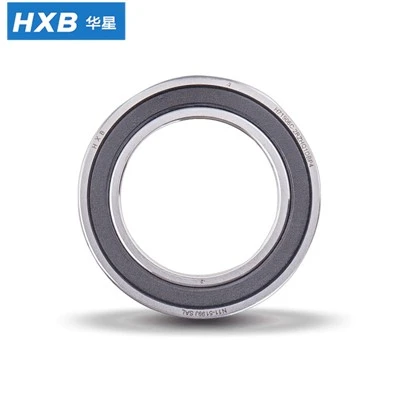
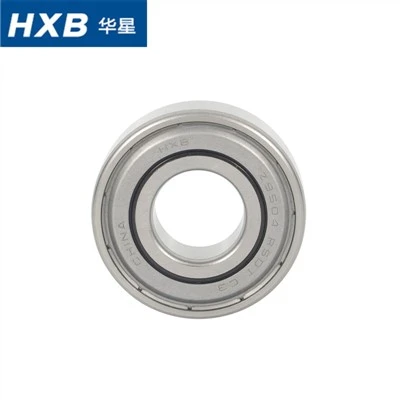
Unique design of angular contact ball bearings
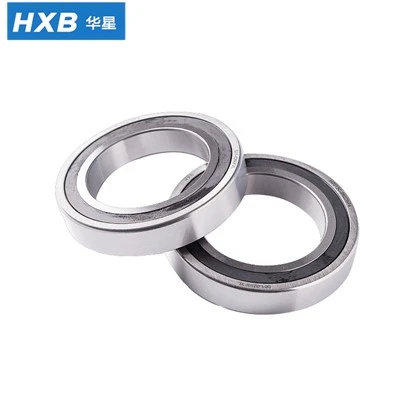
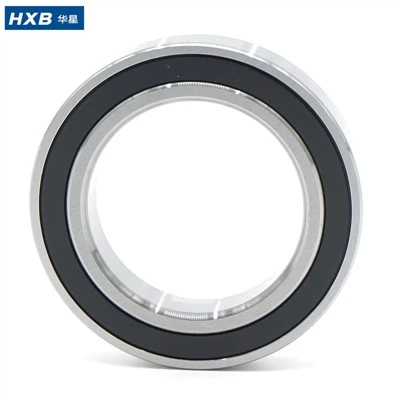
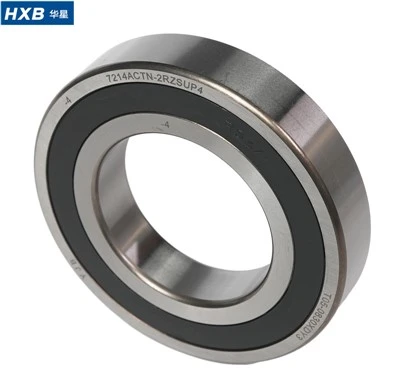
The key reason why angular contact ball bearings are so popular in the industrial field lies in their unique design structure. The raceway of this bearing contacts the inner and outer rings at a certain angle, usually 15°, 25° or 40°, allowing it to bear both radial and axial loads. Compared with ordinary deep groove ball bearings, angular contact ball bearings exhibit smaller friction losses and longer service life during high-speed operation. Its internal structure has been precisely calculated, and the contact angle between the ball and the raceway is reasonably designed to ensure uniform load distribution.
Performance advantages and application scenarios
- High-speed capability: Optimized internal geometry reduces rotational resistance, making it suitable for high-speed operating environments.
- Bidirectional load-bearing: can handle radial and axial forces at the same time, especially suitable for compound load conditions.
- Accuracy maintenance: high rotational accuracy is maintained even after long-term use.
- Compact design: Compared with other types of bearings, the volume is smaller under the same load capacity.
This type of bearing is commonly found in machine tool spindles, automobile gearboxes, motors and other equipment that require high precision and speed.
Key points for selection and use
There are several factors to consider when selecting an angular contact ball bearing. The first is the choice of contact angle: a smaller contact angle is more suitable for working conditions dominated by radial loads, while a larger contact angle is more suitable for applications with larger axial loads. The adjustment of preload force is also crucial. Appropriate preload can improve bearing rigidity, but excessive preload will increase friction and temperature rise. Special attention needs to be paid to the directionality of the bearings during installation. Bearings used in pairs need to be installed in accordance with the prescribed configuration to ensure correct load transmission. Regular lubrication and maintenance cannot be ignored, as this is directly related to the service life and performance of the bearing.