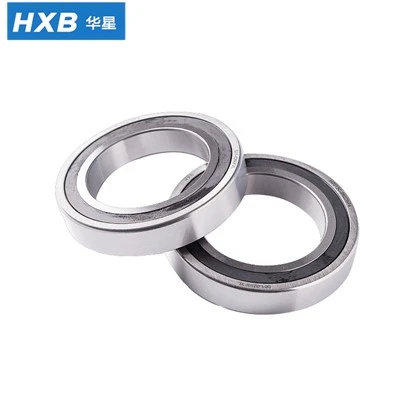
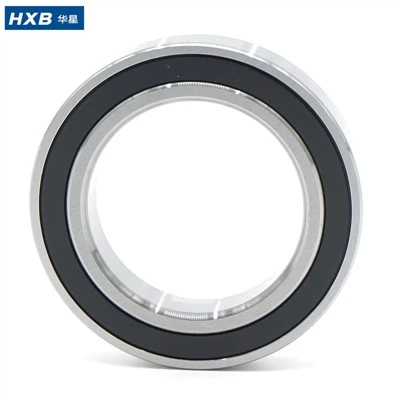
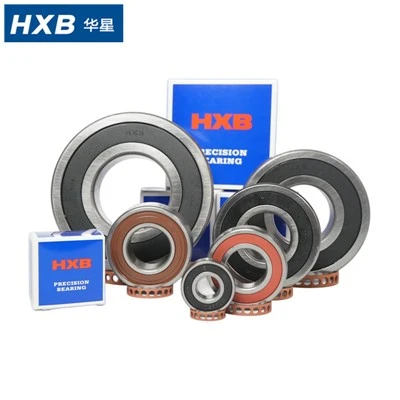
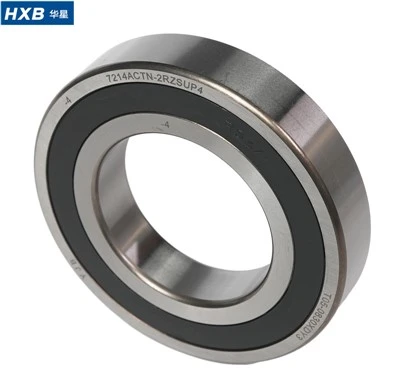
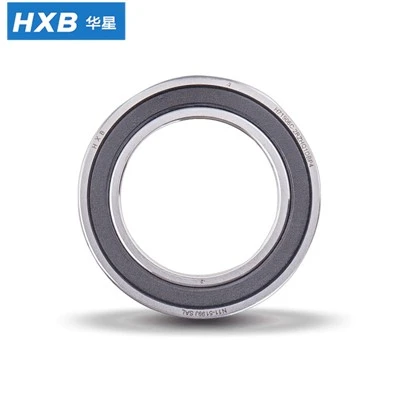
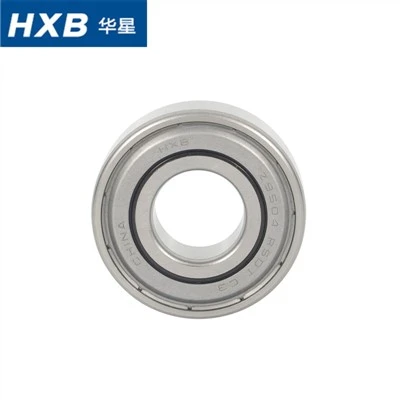
Hybrid ceramic ball bearings are composite bearings featuring rolling elements made of ceramic materials-such as silicon nitride-and inner and outer rings made of metal. Manufactured using a hot isostatic pressing (HIP) sintering process, the rolling elements possess a density 40% that of steel and an elastic modulus 50% higher than that of bearing steel. They offer high-temperature resistance (up to 800°C), corrosion resistance, electrical insulation, non-magnetic properties, and self-lubricating capabilities. Compared to all-steel bearings, these bearings exhibit a 30–50% lower friction coefficient, a 30–50% reduction in operating temperature rise, and a service life that is 3–5 times longer. Typical models feature bearing steel or stainless steel rings paired with silicon nitride balls, covering a bore diameter range of 5–180 mm.
These products are suitable for applications such as high-speed machine tool spindles, wind turbines, drive motors for new energy vehicles (e.g., Tesla Model 3, Audi ATA250 motors), and semiconductor manufacturing equipment.