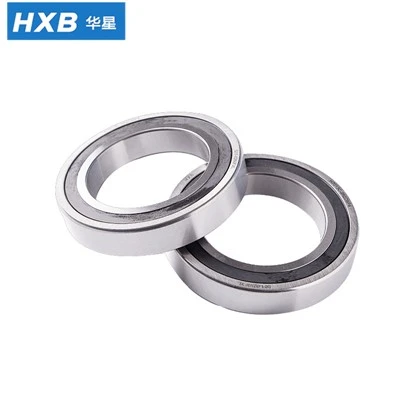
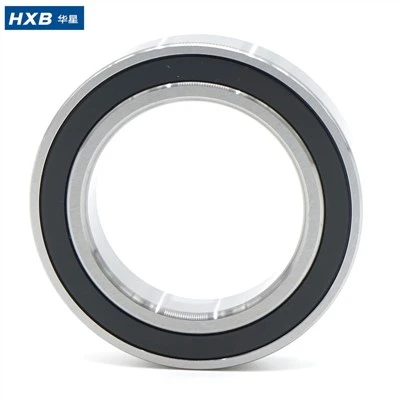
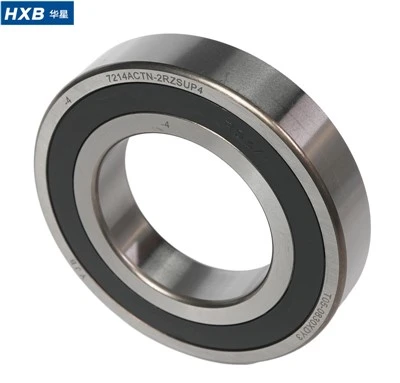
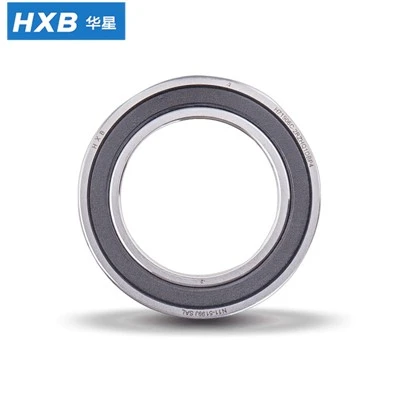
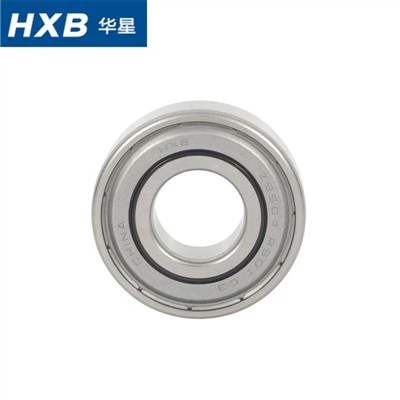
When equipment must withstand both radial and axial loads simultaneously, angular contact ball bearings are often the engineer's top choice. However, selecting the right model is merely the first step; installation methods, mating components, and maintenance strategies all play a critical role in determining final performance.
Why are angular contact ball bearings the preferred choice for high-precision equipment?
In applications requiring precise rotational control, the axial load-carrying capacity of standard deep-groove ball bearings often falls short. In contrast, precision angular contact ball bearings feature a specialized raceway design that establishes a fixed contact angle between the balls and the inner and outer rings. This structural configuration offers three key advantages:
- Combined load capacity: Contact angles ranging from 15° to 40° allow the bearing to simultaneously handle radial forces and unidirectional axial forces.
- Precision retention: Preloaded installation effectively minimizes axial shaft displacement, making them ideal for precision applications such as machine tool spindles.
- High-speed capability: Compared to tapered roller bearings, ball bearings exhibit lower rolling resistance, making them better suited for high-speed angular contact applications.
For space-constrained applications-such as robotic joints or medical equipment-thin-section angular contact ball bearings can reduce the installation footprint without compromising performance. A larger contact angle enhances axial load capacity but results in a correspondingly lower limiting speed.
What are the core advantages of angular contact ball bearings?
Unlike the symmetrical raceways found in standard bearings, the load-bearing characteristics of these bearings resemble those of an angled strut; when an axial load is applied, the force is resolved into radial and axial components via the contact angle. In practice, they offer three distinct advantages:
- Adjustable rigidity: Through paired mounting and preload adjustment, they can be adapted to various vibration environments.
- Extended service life: Hardened rings combined with high-quality balls significantly enhance resistance to metal fatigue.
- Operational versatility: Certain models utilize resin cages, enabling them to withstand higher temperature rises.
For corrosive environments, stainless steel angular contact ball bearings offer superior rust resistance compared to standard plated coatings, making them particularly suitable for food processing or chemical equipment.
Single-row or double-row? How to choose the right angular contact ball bearing for different scenarios? Selection essentially involves balancing three dimensions: load, rotational speed, and space. Common configuration
strategies include:
- High-precision, light-load applications (e.g., optical instruments)
- Prioritize single-row designs to minimize frictional heat.
- Select a contact angle below 25° to ensure a higher speed limit.
- Use phenolic resin cages to reduce vibration.
- Heavy-duty, combined-load applications (e.g., gearboxes)
- Choose double-row angular contact ball bearings or back-to-back paired arrangements.
- A contact angle of 30°–40° is recommended.
- Steel cages offer better impact resistance.
- Alternative considerations.
- Use self-aligning ball bearings if self-aligning capability is required.
- Consider tapered roller bearings for extremely high axial loads.
While double-row bearings offer high load-carrying capacity, they impose stricter requirements on the parallelism of mounting surfaces.
Once the bearing is selected, how should mating components be chosen to avoid compromising performance?
Purchasing the bearing is just the beginning; these mating components directly impact system reliability:
- Cage selection: Resin cages are suitable for high speeds, while metal cages offer impact resistance. Ensure compatibility between the bearing cage and the lubricant to prevent material reactions.
- Lubrication strategy: Use synthetic oil for high-speed applications and high-viscosity grease for heavy-duty conditions. Food-grade environments require NSF-certified lubricants.
- Auxiliary components: Insufficient housing rigidity can lead to uneven loading, and aging seals can allow contaminants to enter-these hidden weaknesses are more likely to cause failures than the bearing itself.
Limit grease fill to 30%–50% of the bearing's internal space; overfilling actually increases frictional heat.
What installation details can significantly reduce the service life of angular contact ball bearings?
Even when high-quality bearings are selected, the following operational errors can still lead to premature failure:
- Rough installation: Striking the outer ring directly with a hammer damages the raceway; hydraulic tools or induction heaters are more reliable options.
- Improper preload: Excessive preload accelerates wear, while insufficient preload causes vibration; torque wrenches should be used for precise control.
- Misalignment: Eccentricity exceeding 0.05 mm significantly shortens service life.
- Removal method: Use specialized bearing removal tools to avoid scoring the shaft journal.
Measure the actual dimensions of the shaft and bearing rings prior to installation; the resulting fit (interference/clearance) is more critical than theoretical values.
From selecting thrust angular contact ball bearings to choosing the appropriate installation tools, the core principle is always alignment with actual operating conditions-there is no absolute "good" or "bad," only suitability.