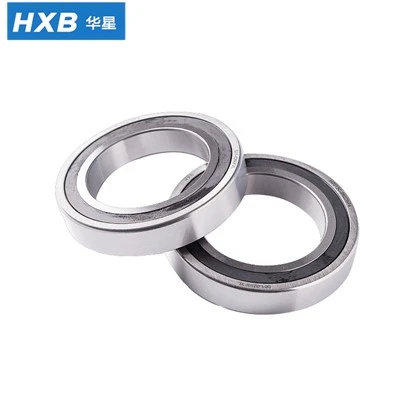
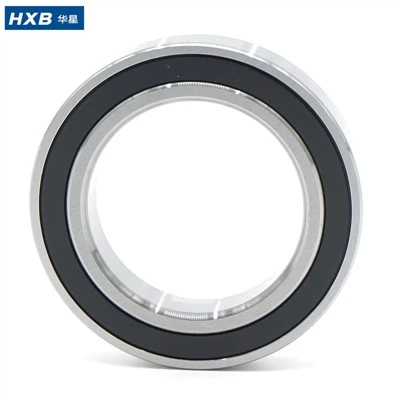
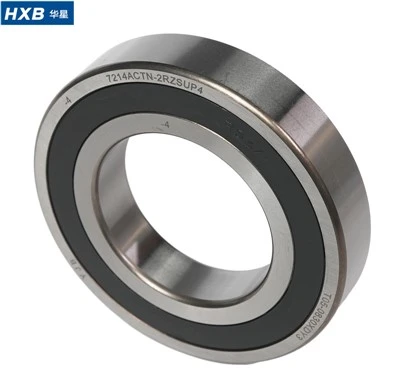
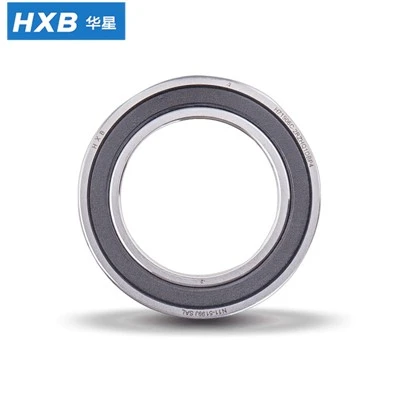
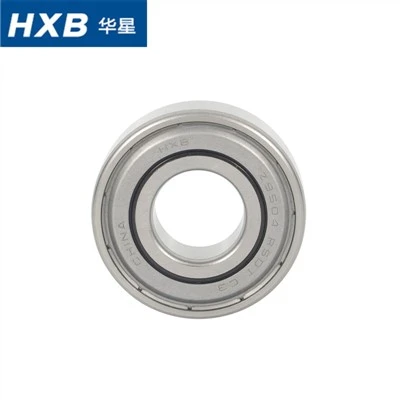
High-speed precision angular contact ball bearings are primarily used in high-speed rotating applications involving light loads. They require high precision, high rotational speeds, low temperature rise, low vibration, and a specific service life. Often installed in pairs to support high-speed motorized spindles, they are critical components for the high-speed motorized spindles found in internal grinding machines.
Installation Configurations
Angular contact ball bearings can be selected using the "Kuaiyiyou" automation selection guide. There are three installation configurations: back-to-back, face-to-face, and tandem. In a back-to-back arrangement (where the wide faces of the two bearings face each other), the contact angle lines diverge along the axis of rotation; this increases angular rigidity in both radial and axial directions and provides maximum resistance to deformation. In a face-to-face arrangement (where the narrow faces of the two bearings face each other), the contact angle lines converge toward the axis of rotation, resulting in lower angular rigidity. Because the inner rings protrude beyond the outer rings, clamping the outer rings together eliminates the initial clearance and increases the preload. In a tandem arrangement (where the wide faces of both bearings point in the same direction), the contact angle lines are parallel and oriented in the same direction, allowing the two bearings to share the working load acting in that direction. However, to ensure axial stability with this configuration, two sets of tandem-arranged bearings must be installed in opposition at the two ends of the shaft.
Key Technical Specifications:
1. Bearing precision: Exceeds GB/307.1-94 Class P4 standards.
2. High-speed performance: dmN value of 1.3–1.8 × 10⁶/min.
3. Average service life: >1,500 hours.
The service life of high-speed precision angular contact ball bearings is significantly influenced by installation; the following points should be observed:
1. Installation must be performed in a clean, dust-free room. Bearings require careful selection and matching, and spacers must be precision-ground; while maintaining equal heights for the inner and outer ring spacers, spacer parallelism must be controlled to within 1 µm.
2. Bearings must be thoroughly cleaned before installation, with the inner ring ramp facing upward; they should rotate smoothly without any sense of sticking or resistance. After drying, apply the specified amount of grease; for oil-mist lubrication, apply a small amount of oil-mist lubricant.
3. Use specialized tools for installation to ensure even force distribution; striking or hammering the bearings is strictly prohibited.
4. Bearings should be stored in a clean, well-ventilated area free from corrosive gases, with relative humidity not exceeding 65%; for long-term storage, periodic rust-prevention maintenance is required.