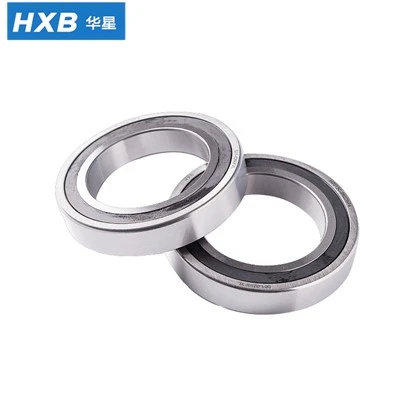
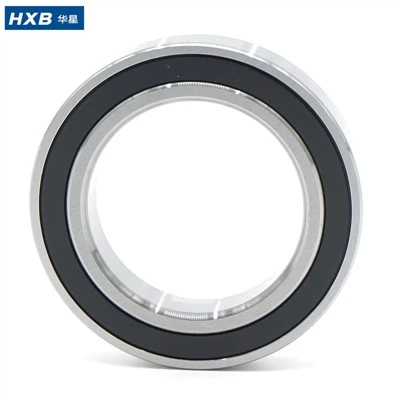
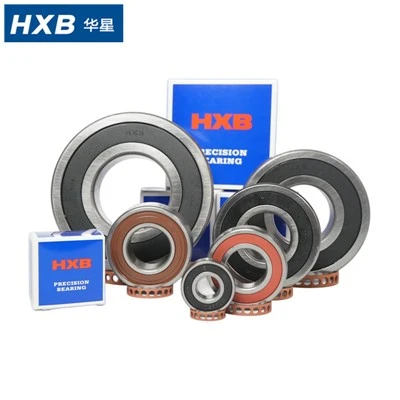
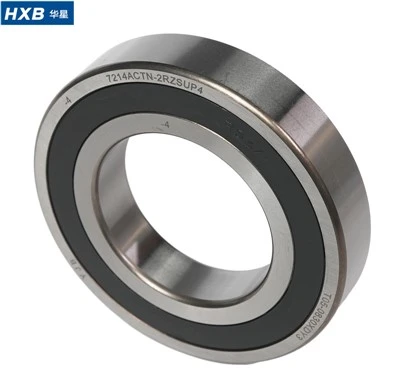
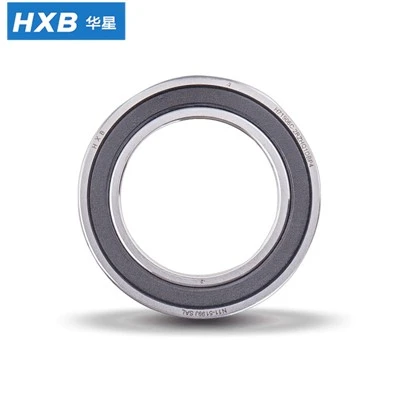
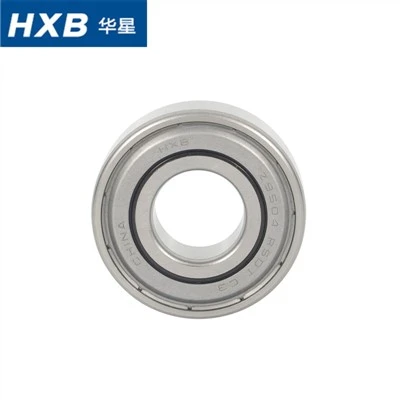
The following are the types of bearings commonly used in servo motors:
(1) Deep-groove ball bearings: Simple in structure and low in cost; suitable for low-to-medium load applications.
(2) Angular contact ball bearings: Capable of withstanding combined axial and radial loads; suitable for high-speed operation.
(3) Cylindrical roller bearings: High load-carrying capacity, but generally unsuitable for high-speed applications.
(4) Crossed roller bearings: High precision and capable of withstanding loads from multiple directions, though they are more expensive.
Key Considerations for Bearing Selection
Several factors must be considered when selecting bearings for servo motors:
(1) Rotational speed: High-speed operation requires the selection of appropriate bearing types and lubrication methods.
(2) Load: The magnitude of axial and radial loads determines the required load-carrying capacity of the bearing.
(3) Precision: High-precision applications require bearings with higher precision ratings.
(4) Service life: Design life varies significantly among different types of bearings.
(5) Environment: Environmental factors such as temperature, humidity, and dust influence bearing selection.
Bearing Maintenance
Servo motor bearings require regular maintenance to ensure long-term, stable operation:
(1) Lubrication: Select the appropriate grease or oil based on operating conditions and replenish or replace it regularly.
(2) Cleaning: Keep the area around the bearing clean to prevent the ingress of contaminants.
(3) Inspection: Regularly monitor the bearing's operating noise and temperature, and address any abnormalities promptly.
(4) Installation: Proper installation significantly impacts bearing service life and should be performed by qualified professionals.