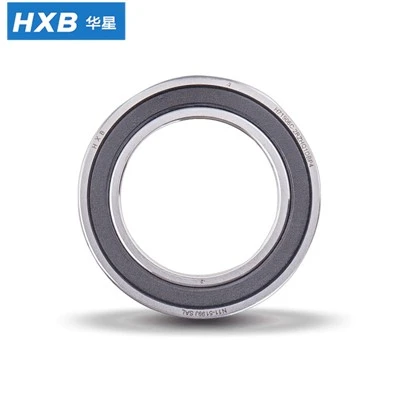
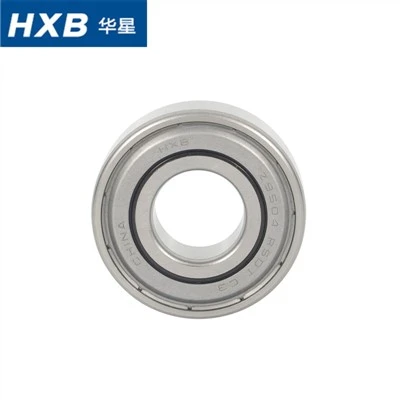
Proper lubrication selection is crucial during installation; vibration motor bearings often require grease containing EP (Extreme Pressure) additives, and lubrication intervals should be shortened. A tight fit is required between the shaft and the bearing housing; the installation process must be executed correctly-pressing the inner ring onto the rotor while maintaining a loose fit for the outer ring-and ensuring appropriate preload via the wave washer without subjecting the assembly to impact blows.
Key parameters must be verified prior to installation; generally, a j56 fit is used for the inner ring and H7 for the outer ring, though this is not absolute. For aluminum-casing motors, the fit should be one grade tighter than that used for cast-iron frames due to aluminum's higher thermal expansion coefficient. If a die-cast aluminum rotor utilizes the standard manual-specified fit, adding an O-ring to the outer ring is recommended to prevent "ring creeping" (rotation of the outer ring within the housing). Conversely, for external-rotor motors where the outer ring rotates, a tight fit should be used for the outer ring and a transition fit for the inner ring.
The installation objective is to ensure that, under normal operating conditions, the bearing's internal working clearance is a positive value close to zero; the optimal working clearance is a positive value approaching zero.
Bearing faults primarily manifest as abnormal noises: distinct rolling and vibration sounds indicate excessive clearance; a dull, heavy tone suggests impurities in the lubricant; irregular knocking sounds imply a fractured or dislodged rolling element; and a whistling shriek accompanied by rolling sounds indicates severe lack of lubrication.
During inspection, check for signs of wear. Hold the inner ring flat with one hand and push the outer ring firmly with the other; if the outer ring rotates smoothly without vibration or noticeable sticking, and does not reverse direction after stopping, the bearing is in good condition-otherwise, it may need to be discarded. Alternatively, hold the outer ring steady and attempt to rotate the inner ring; if it turns very easily, this indicates severe wear. The distribution of internal grease in new bearings may be uneven, and a grease redistribution process occurs during the initial period of operation; for standard open bearings, the relubrication interval should be halved. For vehicle motors, it is recommended to inspect bearing clearance every 20,000 kilometers and replace the bearing if the clearance exceeds 0.05 mm.
Abnormal bearing noise can stem from various causes, such as poor lubrication, improper clearance, cleanliness issues, installation errors, or surface damage to components. Solutions must be tailored to the specific cause-for instance, selecting appropriate grease, adjusting clearance and preload, improving cleanliness and sealing, or enhancing installation precision.