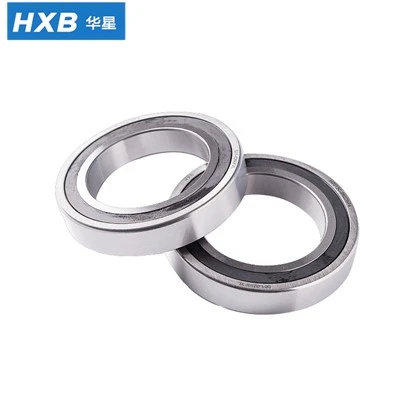
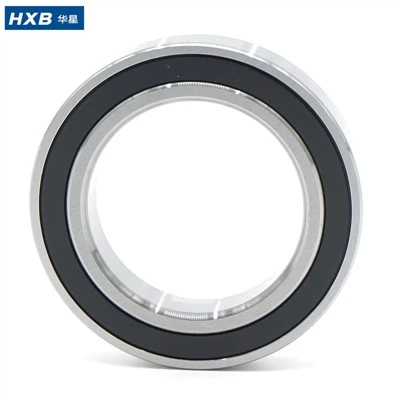
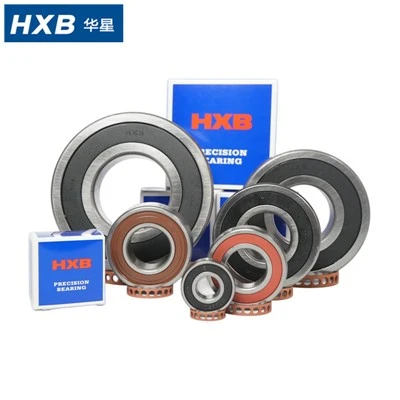
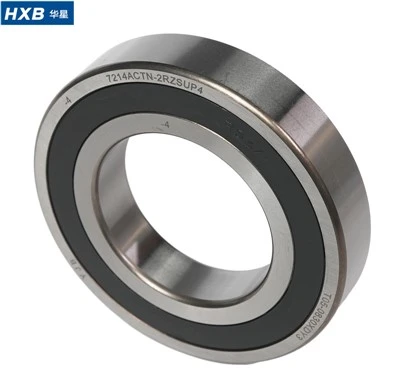
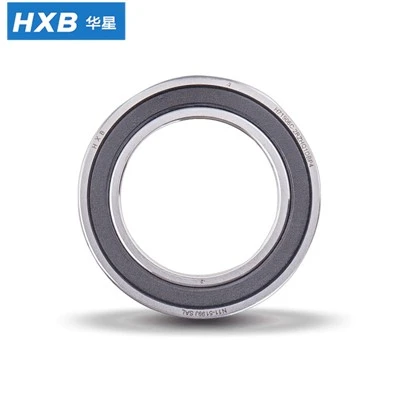
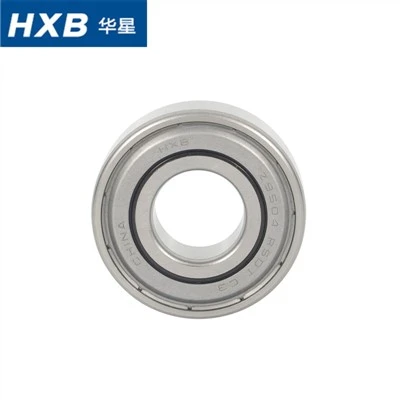
General design considerations for motor bearings include the two structural types of deep-groove ball bearings: sealed bearings (pre-lubricated) and open bearings (externally lubricated). Deep-groove ball bearings are selected for automotive motors due to their high mechanical efficiency (up to 99%) and their ability to primarily withstand radial loads and minor axial loads during motor operation. Input parameters for bearing selection include boundary dimensions (inner/outer diameters, width, lubrication method, etc.), materials and tolerances for the bearing housing and shaft, operating temperature, rotor weight, dynamic balance precision, bearing arrangement, axial forces, and load profiles (torque, rotational speed, duration). Bearing life calculations are based on the number of revolutions, incorporating reliability and life correction factors; the optimal operating clearance is a positive value close to zero.
Bearings for new energy vehicle drive motors must address requirements such as high rotational speeds, high precision, low noise and vibration, high-temperature performance, effective sealing and lubrication, and environmental sustainability. Rotational speeds can reach 18,000 rpm, with *dmn* values exceeding 800,000; design specifications require bearing materials with excellent high-temperature performance, while sealing designs must prevent the ingress of contaminants (such as dust and moisture) and the leakage of grease.
Bearing arrangement and fit designs include four schemes: interference fit between the outer ring and housing with clearance fit between the inner ring and shaft; clearance fit between the outer ring and housing with interference fit between the inner ring and shaft; slight interference fit between the outer ring and housing (secured by a pressure plate) with clearance fit between the inner ring and shaft (secured by a nut); and anti-creep designs (to prevent outer ring rotation), such as installing an O-ring on the outer ring or adding a steel/iron sleeve to the housing. Design requirements for associated components cover dimensional tolerances, geometric tolerances, and surface roughness for both the bearing housing bore and the mating shaft journal, as well as specifications for lubricant flow rates.
Specialized design considerations include measures to prevent electrical erosion of the bearings, requiring analysis of the types of shaft currents involved, such as electrical discharge (sparking), high-frequency loop currents, and currents caused by magnetic circuit asymmetry. Common solutions for automotive electric motors include the use of ceramic ball bearings combined with conductive rings, conductive rings alone, carbon brushes combined with insulated bearing housings, and carbon brushes combined with ceramic ball bearings.