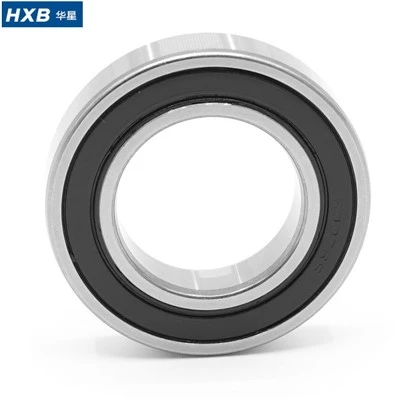
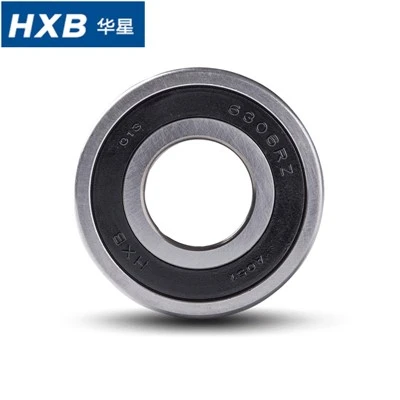
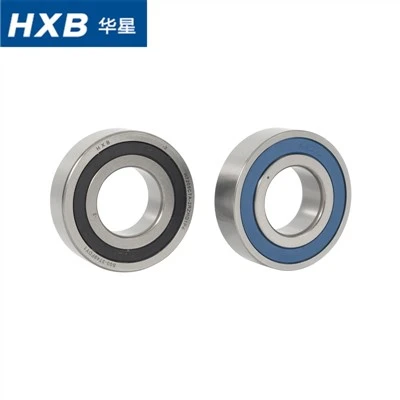
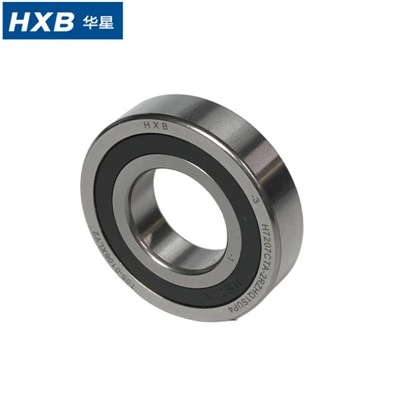
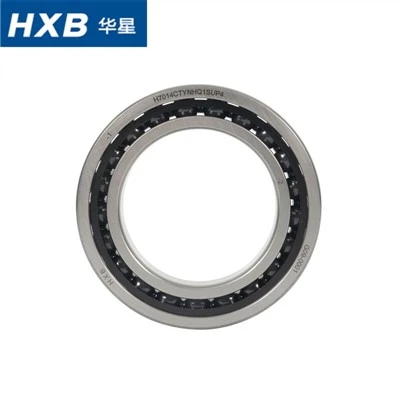
In the realm of mechanical engineering, bearings play a pivotal role in ensuring the smooth and efficient operation of various machinery. Among the many types of bearings available, Angular Contact Ball Bearings 7008CEHC/GAP4A stand out for their unique design and performance characteristics. As a supplier of these high - quality bearings, I have seen firsthand how they contribute to the functionality of diverse applications. In this blog, I will delve into the details of what axial movement is in Angular Contact Ball Bearings 7008CEHC/GAP4A under load and why it is of significant importance.
Understanding Angular Contact Ball Bearings 7008CEHC/GAP4A
Angular Contact Ball Bearings 7008CEHC/GAP4A are designed to support combined radial and axial loads. The “angular contact” design means that the line of contact between the balls and the raceways is at an angle to the bearing axis. This characteristic allows the bearing to handle both radial forces (perpendicular to the shaft) and axial forces (parallel to the shaft).
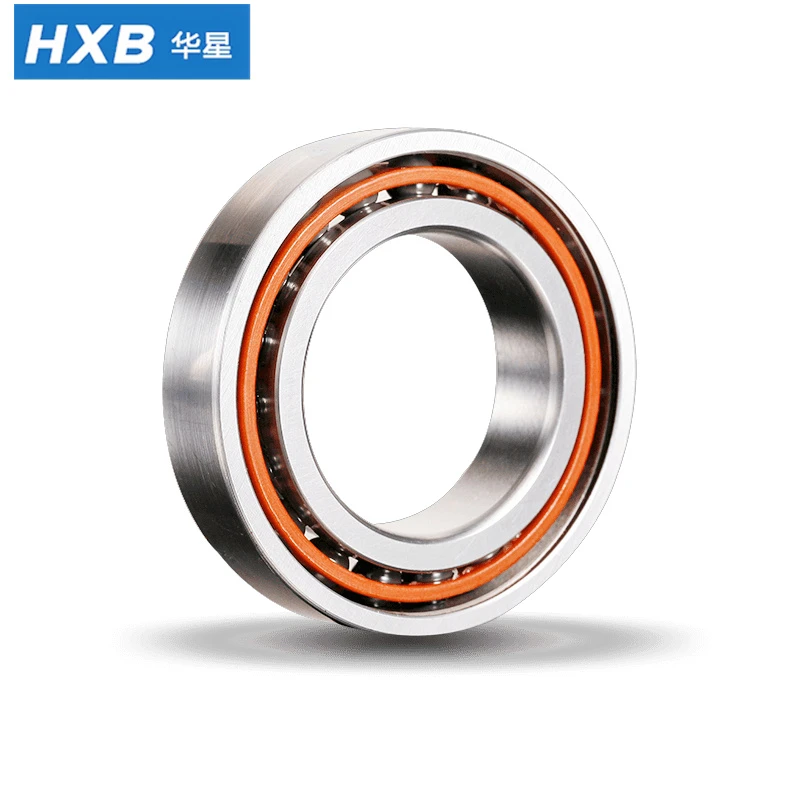
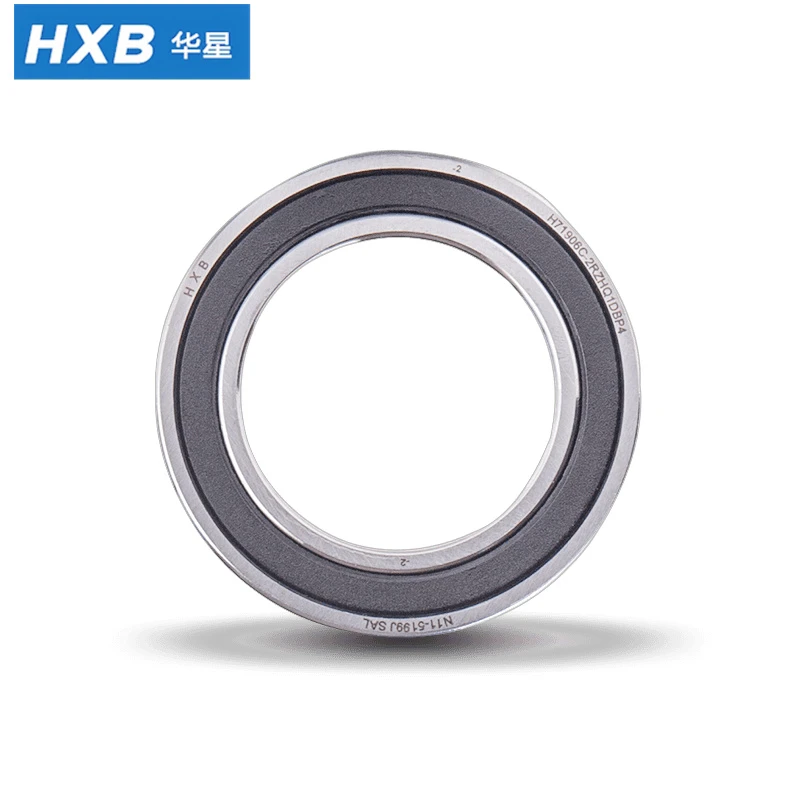
The model number 7008CEHC/GAP4A contains specific information about the bearing's features. The “7008” indicates the bearing series and size, while “CEHC” might refer to certain internal design features, such as cage type or internal clearance specification. “GAP4A” could represent further quality - related or application - specific details, like a particular level of precision or a specific arrangement for pre - loading.
What is Axial Movement?
Axial movement, also known as axial displacement, is the movement of the bearing in the direction parallel to its axis. When a load is applied to an Angular Contact Ball Bearing 7008CEHC/GAP4A, the balls roll along the raceways, and depending on the nature and magnitude of the load, the bearing may experience some degree of axial movement.
Under normal operating conditions, a certain amount of axial movement is expected and can be accounted for in the design of the machinery. However, excessive axial movement can lead to problems such as increased wear, reduced bearing life, and potential failure of the equipment.
Factors Affecting Axial Movement under Load
Magnitude and Direction of Load
The most obvious factor affecting axial movement is the load itself. If the axial load is large, the bearing will experience more significant axial displacement. For example, in a high - speed spindle application where there are sudden changes in the cutting force, the axial load on the Angular Contact Ball Bearings 7008CEHC/GAP4A can vary rapidly, leading to corresponding changes in axial movement.
The direction of the load also matters. A pure axial load will cause the bearing to move linearly along the axis, while a combined radial and axial load will result in a more complex movement pattern. Bearings need to be designed to handle these different load scenarios effectively.
Bearing Pre - loading
Pre - loading of the Angular Contact Ball Bearings 7008CEHC/GAP4A is another crucial factor. Pre - loading involves applying an initial axial force to the bearing to eliminate internal clearance. When a bearing is pre - loaded, it can better resist axial movement under load. A properly pre - loaded bearing will have less axial displacement compared to an un - pre - loaded one, as the pre - load helps to keep the balls in closer contact with the raceways and maintain a more stable position.
However, over - pre - loading can also be a problem. It can lead to increased friction, higher operating temperatures, and premature wear of the bearing. Therefore, finding the right balance in pre - loading is essential for minimizing axial movement while ensuring optimal bearing performance.
Material Properties
The materials used in the manufacturing of the bearing components, such as the balls and raceways, also influence axial movement under load. For example, high - quality steel alloys with good hardness and fatigue resistance can better withstand the forces exerted during operation. Additionally, the surface finish of the raceways affects the rolling motion of the balls. A smoother surface finish reduces friction and can lead to more consistent and predictable axial movement.
Measuring Axial Movement
To ensure the proper functioning of the Angular Contact Ball Bearings 7008CEHC/GAP4A, it is necessary to measure the axial movement. There are several methods for measuring axial movement:
Mechanical Dial Indicators
Mechanical dial indicators are a simple and widely used tool for measuring axial displacement. They work by contacting the moving part of the bearing and converting the linear movement into a rotation of a dial. By reading the value on the dial, the amount of axial movement can be determined.
Laser Displacement Sensors
Laser displacement sensors are more advanced and offer higher precision. They use a laser beam to measure the distance to the object (in this case, the bearing) and can detect very small changes in position. These sensors are ideal for applications where high - accuracy measurements of axial movement are required, such as in precision machining or robotics.
Importance of Controlling Axial Movement in Bearings
Controlling axial movement is of utmost importance for several reasons:
Equipment Accuracy
In applications such as machine tools, the accuracy of the machining process depends heavily on the precise positioning of the spindle. Excessive axial movement of the Angular Contact Ball Bearings 7008CEHC/GAP4A in the spindle can lead to errors in machining, resulting in parts that do not meet the required tolerances. By controlling axial movement, the overall accuracy of the equipment can be maintained, ensuring high - quality production.
Bearing Life
Excessive axial movement can cause uneven loading on the bearing components, leading to premature wear and fatigue. This can significantly reduce the service life of the bearing. By minimizing axial movement, the bearing can operate under more uniform conditions, extending its lifespan and reducing the frequency of replacement.
Noise and Vibration Reduction
Uncontrolled axial movement can also lead to increased noise and vibration in the machinery. This can be a nuisance for operators and may even affect the performance of other components in the system. By controlling axial movement, the smoothness of operation can be improved, reducing noise and vibration levels.
Related Products in Our Catalog
As a bearing supplier, we also offer a range of related products such as Hybrid Spindle Bearings HCB7205 - C - 2RSD - T - P4S, Spindle Bearings HCB7008C - 2RSD - T - P4S - UL, Precision Ceramic Bearing HCB7006 - C - T - 2RSD - P4S, and Spindle Bearings HCB71906C - 2RSD - T - P4S - UL. These bearings are designed to meet different application requirements and offer similar performance characteristics to the Angular Contact Ball Bearings 7008CEHC/GAP4A.
Conclusion
Axial movement of Angular Contact Ball Bearings 7008CEHC/GAP4A under load is a complex yet crucial topic in the field of mechanical engineering. Understanding the factors that affect axial movement, how to measure it, and the importance of controlling it is essential for ensuring the proper operation and longevity of the bearings.
If you are in the market for high - quality Angular Contact Ball Bearings 7008CEHC/GAP4A or any of our related products, please do not hesitate to contact us. We have a professional team ready to assist you in selecting the right bearings for your specific applications and providing you with the best possible solutions. Feel free to reach out for more information and to start a procurement discussion.
References
- Harris, T. A., & Kotzalas, M. N. (2007). Rolling Bearing Analysis. John Wiley & Sons.
- Skive, T. B. (1996). Handbook of Bearings. McGraw - Hill.
- "Bearing Design and Application Engineering" textbook, various editions.