Bearing Construction
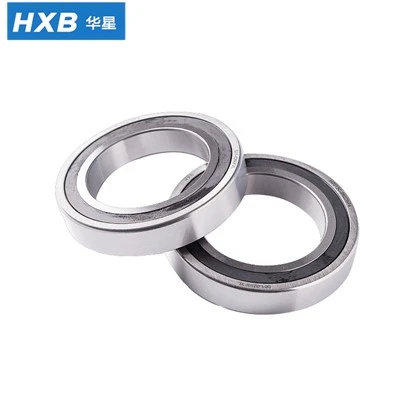
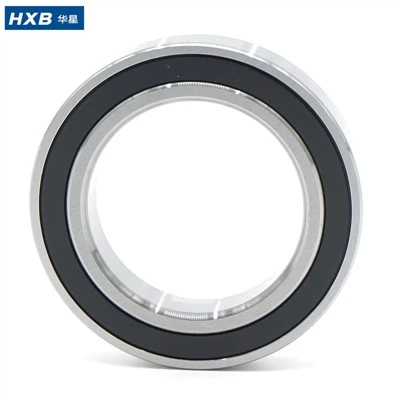
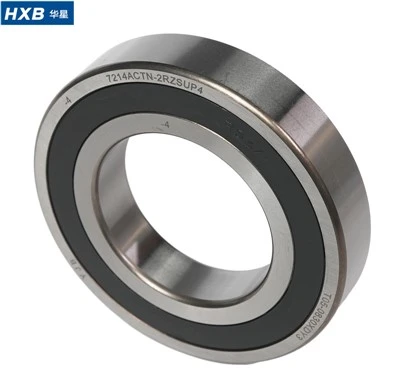
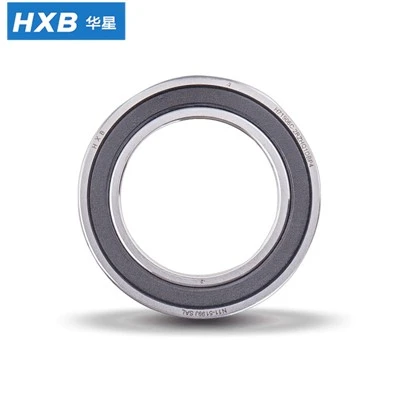
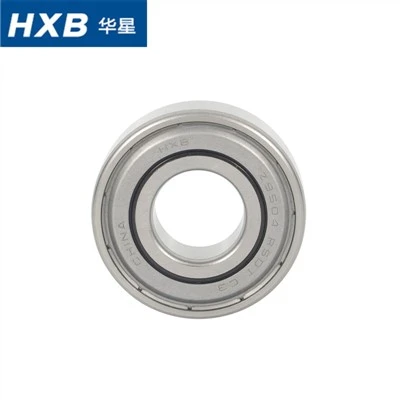
Deep-groove ball bearings feature a simple structure. Compared to other types, they are easier to manufacture with high precision, making them suitable for mass production in series and resulting in lower manufacturing costs; consequently, they are extremely widely used. In addition to the basic design, there are various structural variants, such as bearings with dust shields, bearings with rubber seals, bearings with snap-ring grooves, high-load-capacity bearings with filling slots, and double-row deep-groove ball bearings.
Bearing Types
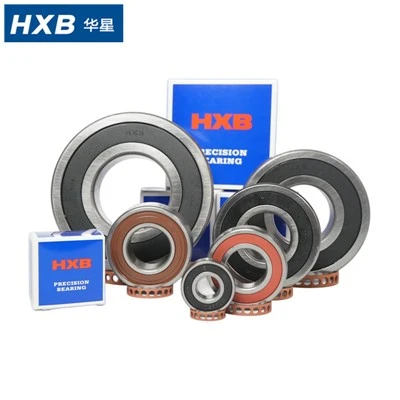
Deep-groove ball bearings are primarily designed to support radial loads but are also frequently used to handle combined radial and axial loads. They are particularly useful in high-speed machinery where thrust bearings are unsuitable, as they can withstand pure axial loads in both directions. These bearings are maintenance-free during operation, cost-effective, and highly versatile. Deep groove ball bearing types include: standard deep groove ball bearings (Type 60000); deep groove ball bearings with a snap ring groove in the outer ring (Type 60000N); deep groove ball bearings with a dust shield on one side and a snap ring groove in the outer ring (Type 60000-ZN); deep groove ball bearings with dust shields on both sides and a snap ring groove in the outer ring (Type 60000-2ZN); deep groove ball bearings with a dust shield on one side (Type 60000Z); deep groove ball bearings with dust shields on both sides (Type 60000-2Z); deep groove ball bearings with a seal on one side (Types 60000-LS, 60000-RZ); deep groove ball bearings with seals on both sides (Types 60000-2LS, 60000-2RZ); deep groove ball bearings with a flanged outer ring (Type F60000); deep groove ball bearings with a flanged outer ring and a dust shield on one side (Type F60000-Z); and deep groove ball bearings with a flanged outer ring and dust shields on both sides (Type F60000-2Z)-totaling 11 types.
Based on size, deep groove ball bearings can be classified as follows:
(1) Miniature bearings-bearings with a nominal outer diameter of less than 26 mm;
(2) Small bearings-bearings with a nominal outer diameter of 28–55 mm;
(3) Small-to-medium bearings-bearings with a nominal outer diameter of 60–115 mm;
(4) Medium-to-large bearings-bearings with a nominal outer diameter of 120–190 mm;
(5) Large bearings-bearings with a nominal outer diameter of 200–430 mm;
(6) Extra-large bearings-bearings with a nominal outer diameter of 440 mm or larger.
Machining Methods
The machining methods for deep-groove ball bearing components are as follows:
1. Multi-stage machining: Bearing production typically involves 20 to 40 processing steps, with some processes requiring over 70 steps.
2. Form machining: The working surfaces of bearing components are surfaces of revolution; consequently, form machining methods are suitable for their production.
3. Precision machining: The vast majority of surfaces on bearing components undergo grinding, with dimensional and geometric precision measured in micrometers (μm).