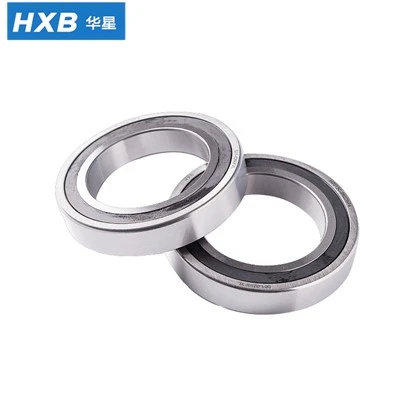
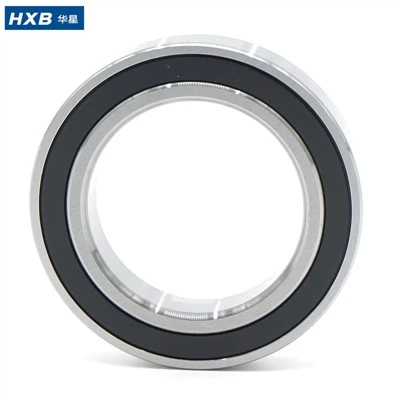
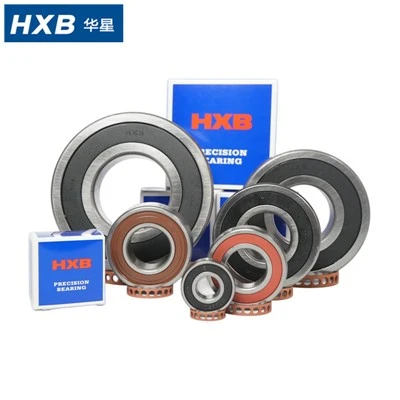
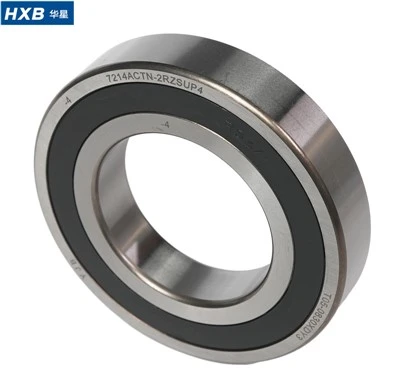
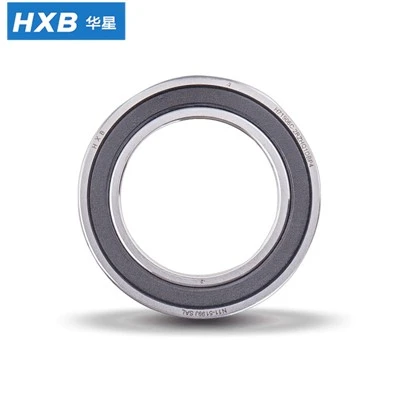
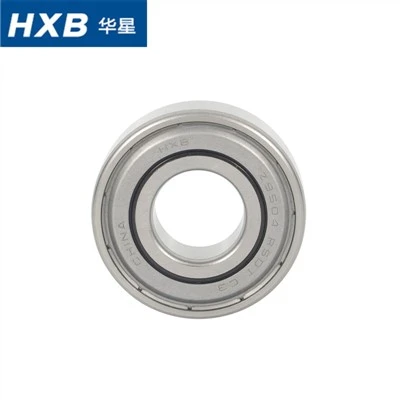
The rolling elements of hybrid ceramic ball bearings feature low density; silicon nitride ceramic has a density of approximately 3.20 g/cm³-roughly 30–40% that of bearing steel-which reduces centrifugal force during high-speed rotation and facilitates high-speed operation. These bearings exhibit excellent high-temperature performance, maintaining strength and hardness virtually unchanged at 800°C and allowing for operating temperatures exceeding 220°C, well above the 160°C limit of standard bearings. Resistant to acid and alkali corrosion, they are suitable for long-term use in seawater; additionally, their electrical insulation properties prevent electrolytic corrosion. Being non-magnetic, they are ideal for superconducting and semiconductor equipment, while their self-lubricating nature enables operation in environments with poor lubrication or no lubrication at all.
Silicon nitride ceramic possesses high hardness and a coefficient of friction 30–50% lower than that of steel, resulting in a service life for hybrid ceramic ball bearings that is three to five times longer than that of all-steel bearings. Their low thermal expansion coefficient-approximately one-third to one-quarter that of steel-ensures minimal dimensional change with temperature fluctuations, making them suitable for environments with significant temperature variations. Furthermore, the higher elastic modulus of ceramic rolling elements compared to bearing steel provides superior dynamic rigidity and offers greater flexibility in bearing design.