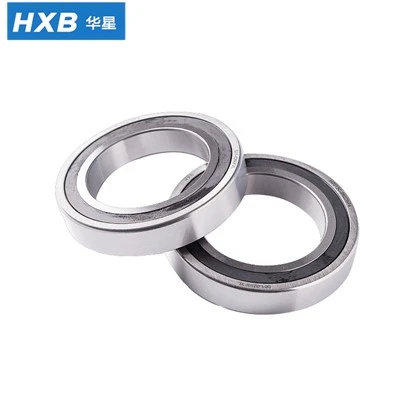
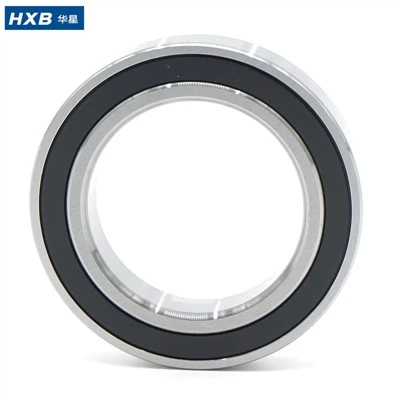
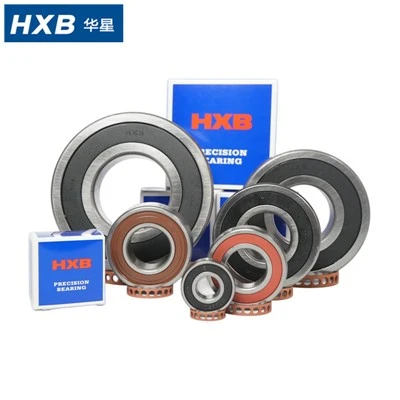
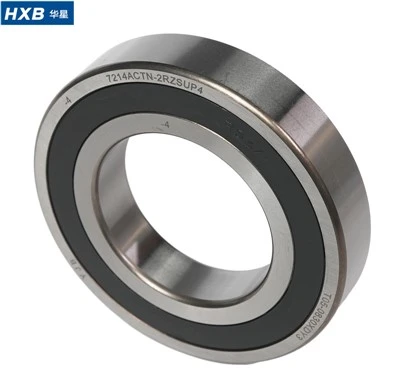
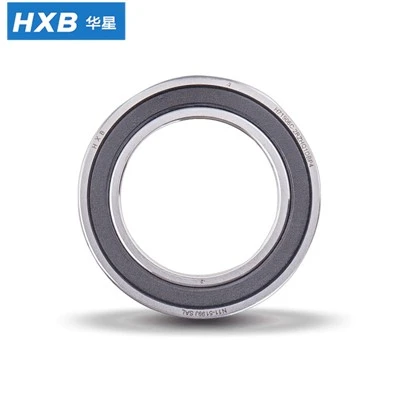
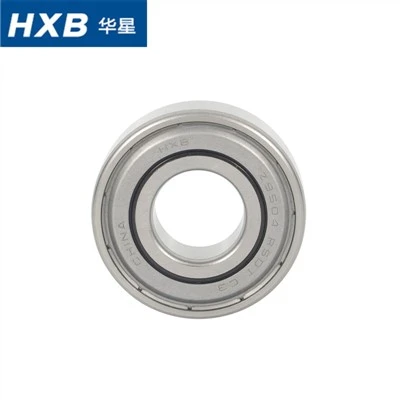
Deep groove ball bearings primarily support radial loads but can also accommodate combined radial and axial loads. When subjected solely to radial loads, the contact angle is zero. However, when possessing significant radial internal clearance, they exhibit characteristics similar to angular contact bearings and can withstand substantial axial loads. Deep groove ball bearings feature a low coefficient of friction and a high limiting speed.
Bearing Characteristics
Deep groove ball bearings are the most widely used type of rolling bearing. They are simple in structure and easy to use. While primarily designed to support radial loads, increasing the radial internal clearance allows them to function somewhat like angular contact ball bearings, enabling them to handle combined radial and axial loads. They can also be used to support purely axial loads in high-speed applications where thrust ball bearings are unsuitable. Compared to other bearing types of the same dimensions, deep groove ball bearings offer a lower coefficient of friction and a higher limiting speed. However, they are not impact-resistant and are unsuitable for heavy-load applications.
Once mounted on a shaft, deep groove ball bearings can limit the axial displacement of the shaft or housing in both directions within the limits of the bearing's axial clearance, thereby providing axial location in both directions. Additionally, these bearings possess a degree of self-aligning capability; they can operate normally even when misaligned by 2′ to 10′ relative to the housing bore, although such misalignment does affect bearing service life.