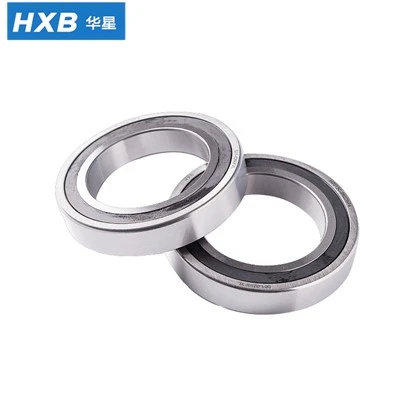
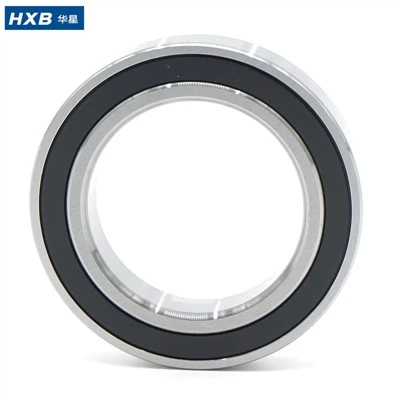
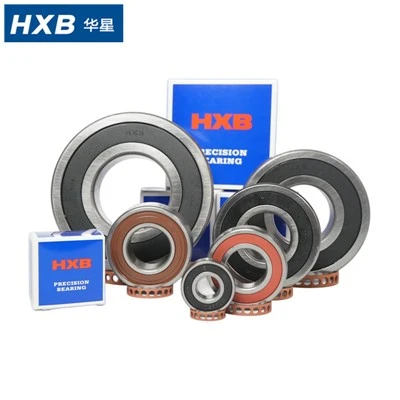
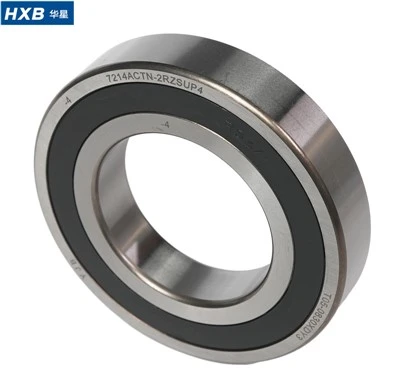
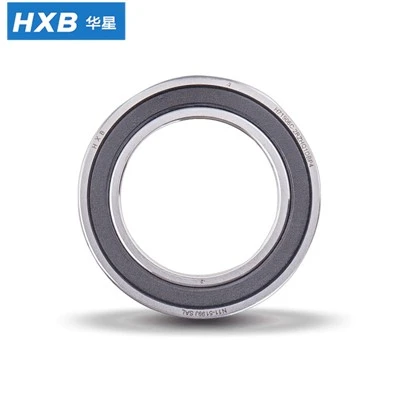
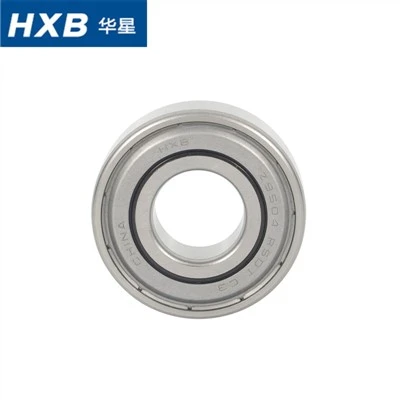
Servo motor bearings serve as the physical core of a servo system; their function extends beyond simple rotational support to the precise execution of mechanical motion derived from high-precision electrical signals. This transformation relies on the bearing's integrated performance across multiple physical dimensions.
Core Functional Dimensions of Servo Motor Bearings
The technical analysis of servo motor bearings begins with five physical requirements that must be met simultaneously-requirements that are often interconnected yet potentially contradictory-forming the technical essence that distinguishes them from standard bearings.
1. Geometric Precision and Rotational Accuracy: Geometric precision refers to dimensional and form errors in bearing rings and rolling elements, typically measured in micrometers. Rotational accuracy, meanwhile, refers to the radial and axial runout of the inner or outer ring during rotation under actual installation and load conditions. While high geometric precision is fundamental, achieving high rotational accuracy also requires accounting for the form and position tolerances of mating components and the impact of installation processes.
2. Stiffness and Preload Control: Stiffness refers to the bearing's ability to resist elastic deformation caused by loads, directly influencing the system's dynamic response and positioning accuracy. Preload is an axial force applied during installation to eliminate internal clearance and enhance stiffness. However, excessive preload increases frictional heat and wear; thus, precise calculation and control are essential to strike a balance between stiffness and temperature rise.
3. Frictional Torque Stability: Servo motors frequently undergo start-stop cycles and reversals, requiring bearing frictional torque to be not only low but also stable, avoiding non-linear fluctuations. Fluctuations in frictional torque translate directly into speed variations or torque ripple, compromising control precision. Achieving this involves the integrated optimization of grease rheological properties, cage guidance methods, and raceway surface texture.
4. Limiting Speed and Temperature Rise Management: At high rotational speeds, centrifugal forces and gyroscopic moments acting on rolling elements increase, cage motion becomes complex, and lubricant churning intensifies, all leading to a rise in temperature. This temperature rise causes thermal expansion of materials, altering preload and clearance-creating a feedback loop. Consequently, the heat-treatment stability of bearing materials, lightweight design, and the high-temperature performance of the lubricant are critical factors.
5. Dynamic Response and Vibration/Noise: As rotating components, bearings can generate vibrations and noise at specific frequencies due to internal microscopic defects or irregularities acting as periodic vibration sources. In servo systems, these vibrations may couple with control frequencies, triggering resonance. Vibrations within specific frequency ranges can be suppressed by improving raceway profile modification techniques, utilizing ceramic rolling elements, and optimizing the dynamic design of the cage.
Technical Implementation Pathways and Evolution of Materials and Processes
Realizing the functional dimensions described above relies on the evolution of technical pathways spanning from materials science to precision manufacturing.
1. Expansion of Material Systems: Traditional high-carbon chromium bearing steels (such as GCr15) have seen improvements in purity and toughness through processes like vacuum degassing and bainitic quenching. Silicon nitride ceramic rolling elements offer distinct advantages in high-speed, electrically insulating, and corrosion-resistant applications due to their low density, high elastic modulus, and low thermal expansion coefficient. For high-temperature or corrosive environments, martensitic stainless bearing steels and surface coating technologies (such as Diamond-Like Carbon, or DLC, coatings) are employed.
2. Precision Manufacturing and Inspection Technologies: Machining precision for bearing components has reached the sub-micron level, relying on ultra-precision grinding, lapping, and polishing processes. In-line inspection technologies go beyond dimensional monitoring to perform quantitative analysis of raceway micro-topography using instruments such as surface profilometers and white-light interferometers. Vibration spectrum analysis has become a standard part of factory inspection to identify and eliminate potential sources of microscopic defects.
3. Refinement of Lubrication Technology: Lubrication has evolved from merely reducing friction to becoming central to system thermal management and service life management. Specialized greases-formulated from synthetic hydrocarbon or ester base oils and thickened with complex lithium soaps or polyureas-require a precise balance of base oil viscosity, thickener fiber structure, and additive formulations (including antioxidants, rust inhibitors, and extreme-pressure agents). Grease fill quantity, filling methods, and re-lubrication intervals are determined through experimental simulation.
4. Bearing Unitization and Integrated Design: To simplify installation and ensure performance, bearings are increasingly supplied as integrated units. Examples include flanged bearing housing units, bearing units with built-in encoders, and designs where the bearing is integrally shrink-fitted onto the motor rotor. Such integration minimizes errors associated with intermediate components and enhances the system's overall rigidity and coaxiality.
Performance Adaptation in Typical Application Scenarios
Different application scenarios place varying emphasis on the five functional dimensions mentioned earlier, requiring targeted adaptation of bearing technology.
1. Industrial Robot Joints: These require high rigidity and low, constant frictional torque to ensure repeatability and trajectory accuracy. Angular contact ball bearings are typically used in pairs with precise preload, utilizing low-viscosity greases with low oil separation rates. Bearings at the input end of harmonic reducers must also withstand significant axial loads.
2. CNC Machine Tool Spindles: High-speed performance and thermal stability are paramount. Angular contact ball bearings utilizing oil-air or oil-mist lubrication are commonly employed to ensure adequate heat dissipation; ceramic ball bearings are widely used in this sector. Bearing configurations (e.g., DB, DF, or DT arrangements) and preload methods (constant-pressure or fixed-position preload) are selected based on the speed-load profile.
3. Semiconductor Manufacturing Equipment: Equipment such as lithography systems and wafer-handling robots imposes stringent requirements regarding cleanliness, low volatility, and low vibration. Bearings undergo special cleaning processes and utilize low-volatility perfluoropolyether (PFPE) grease, solid lubrication, or even unlubricated ceramic bearings. Extremely strict limits are placed on vibration acceleration levels across specific frequency bands.
4. Automated Production Lines and Logistics Sorting Systems: Servo motors in these environments undergo frequent acceleration and deceleration and may be subjected to light shock loads. Bearing designs must balance shock resistance with rapid response capabilities; the strength and guidance method of the cage are particularly critical, often necessitating reinforced engineering plastic cages or surface-treated copper alloy cages.
Technical Challenges and Future Evolution
Current servo motor bearing technology faces several fundamental challenges, which also indicate the direction of its future evolution.
1. Accuracy of multi-physics coupling modeling: In actual operation, bearings function as systems characterized by the tight coupling of mechanical, thermal, tribological, and dynamic phenomena. Establishing a multi-physics coupled digital model capable of accurately predicting performance, service life, and reliability is a prerequisite for design optimization; currently, however, such models still rely on calibration using extensive experimental data.
2. Material and lubrication limits under extreme operating conditions: Conventional materials and lubricants may fail under extreme conditions such as ultra-high vacuum, cryogenic temperatures, intense radiation, or highly corrosive environments. Developing novel alloys, ceramic-matrix composites, and adaptive smart lubricating materials represents a frontier in this field.
3. Integration of condition monitoring and predictive maintenance: Integrating microsensors-capable of monitoring vibration, temperature, and acoustic emissions-directly into bearings, or indirectly monitoring bearing status via motor current signature analysis to enable predictive maintenance, is a key trend for enhancing system reliability and availability. This necessitates higher signal sensitivity and consistency in the bearings themselves.
4. Complexity of service life and reliability assessment: Calculations of bearing fatigue life (such as those based on Lundberg-Palmgren theory) exhibit statistical scatter. Under complex, variable load spectra encountered in practice, there is an ongoing engineering need to establish more accurate reliability assessment models that comprehensively account for multiple failure modes, including material fatigue, lubrication failure, and contamination-induced wear.
The evolution of servo motor bearing technology is essentially a process of continuous optimization and balancing-conducted within physical constraints-to meet the ever-increasing demands for dynamic performance and precision in servo systems. Future development does not aim for breakthroughs in isolated metrics; rather, it moves toward deeper system integration, more precise performance prediction, broader adaptability to operating conditions, and smarter condition sensing. This progression relies on the interdisciplinary convergence of materials science, mechanical engineering, and information sensing, and its advancement will directly empower the high-end equipment manufacturing industry by enhancing precision and efficiency.